A musty smell that comes and goes
Odor that gets stronger when the AC runs or after rain often points to a damp cavity, a closet corner, or an attic issue.
Serving Houston, Texas & surrounding areas
Mon–Fri 8am–6pm · Sat 9am–2pm
If you see staining, smell mustiness, or recently had a leak, a professional inspection can confirm whether mold is present, where it is, and what conditions are feeding it. Houston Mold Removal provides clear findings you can use to make the next decision with confidence.
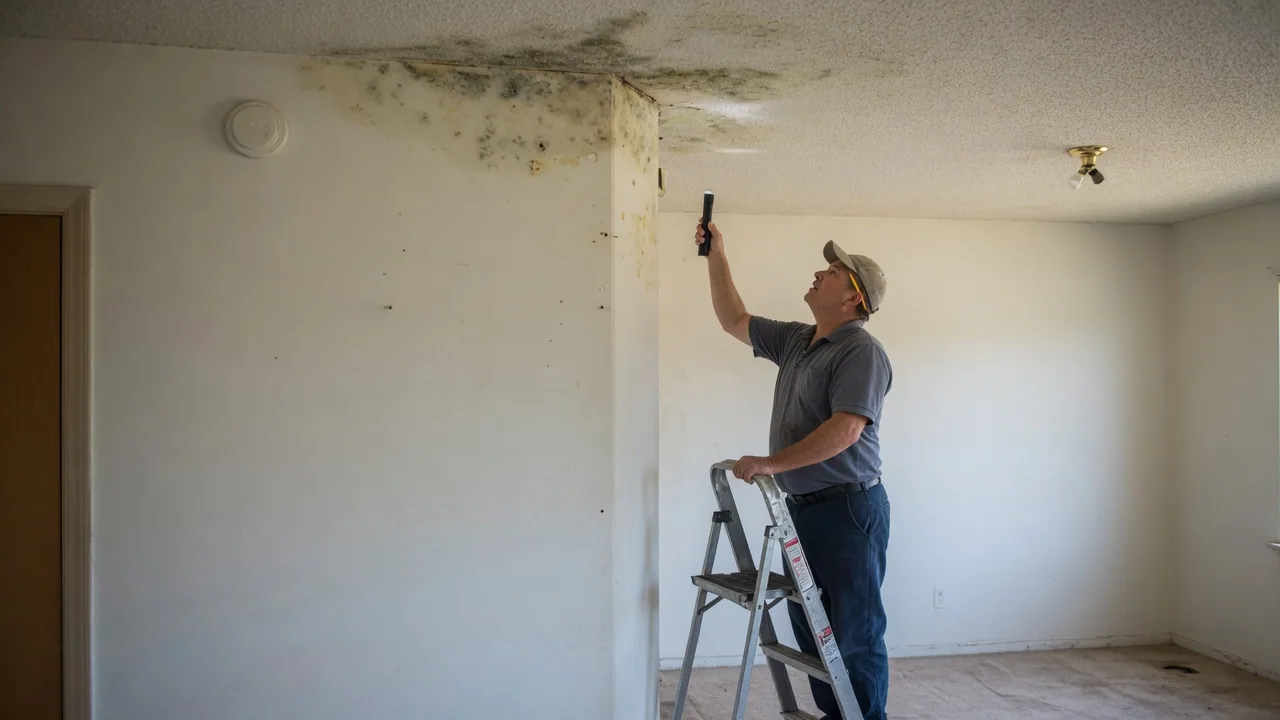
A proper mold inspection Houston homeowners can trust is a fact-finding visit, not a sales pitch. The goal is to answer three questions: Is mold present, where is it, and why is it growing.
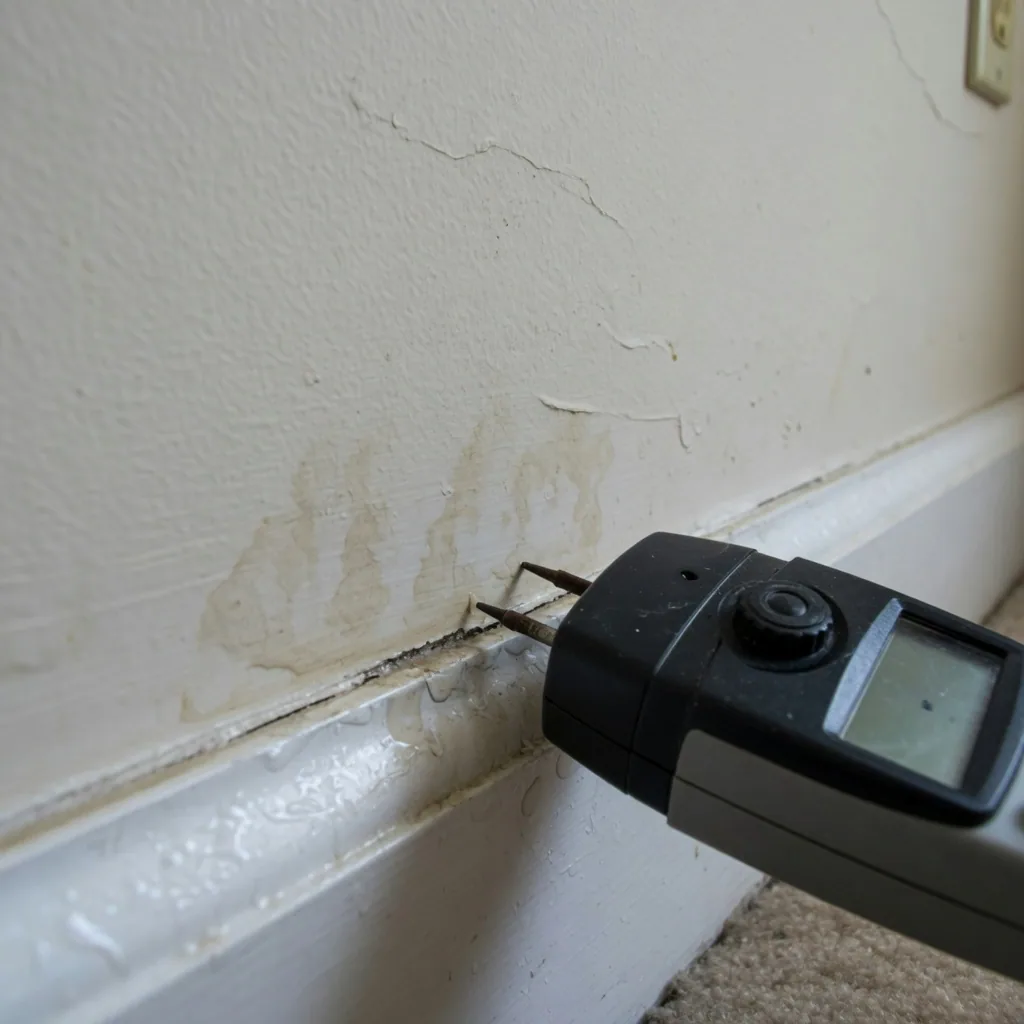
During an inspection we focus on moisture first. In Houston, humidity and frequent rain events mean mold often follows building materials that stayed damp: drywall paper, baseboards, framing, insulation, and contents stored in closets or garages. We look for visible growth, water staining, condensation patterns, and the kinds of small clues that point to a hidden source—for example, soft drywall near a supply line or swelling trim near a tub.
A mold inspection is not automatic clearance testing, and it is not the same thing as removing mold. You will leave the appointment with straightforward observations, documentation, and a plan for next steps. If you need actual cleanup work afterward, that is typically handled as a separate scope. If you are already at that stage, return to Houston mold removal to review the cleanup approach and decide what sequence makes sense for your situation.
Most problems we see start with a moisture pathway. The inspection is built to find that pathway and map how far the impact goes.
Typical inspection checkpoints
Tools and methods you may see on site
We commonly use moisture meters—pin and pinless—infrared imaging as a screening tool, and targeted sampling when it helps answer a specific question. Air samples are only useful when collected with a reason and interpreted with context; surface samples can help document what is on a material when visual identification is uncertain.
If you are meeting with mold inspectors Houston residents use for real estate or post-leak decisions, ask how they decide when sampling is worthwhile. A good inspection explains the reasoning, not just the result.
Odor that gets stronger when the AC runs or after rain often points to a damp cavity, a closet corner, or an attic issue.
Overflowed tubs, supply line failures, roof leaks, and backed-up drains can all leave moisture trapped behind finished surfaces.
Dark specks on drywall, around vents, or near window trim can be surface growth or a symptom of a deeper moisture problem.
If irritation seems worse in one area of the home, an inspection can help identify whether that room has an indoor air quality issue.
A documented inspection can reduce guesswork in negotiations, especially when there is a disclosed prior leak or a known humidity problem.
Foggy windows, damp corners, or sweating ducts can keep materials wet long enough for mold to establish.
Each step connects observations to measurable conditions so you understand what was found and what should happen next.
We start by clarifying the concern—odor, visible growth, a prior leak, or a real estate contingency—and identifying areas you want documented.
We walk the affected rooms and adjacent areas, checking common water pathways and taking moisture readings so the findings are tied to measurable conditions.
If sampling is appropriate, we collect it strategically: to confirm what is on a surface, compare an impacted room to a control area, or support a specific decision.
You get a plain-language summary of what was found, where it was found, and what evidence supports the conclusion, including photos, readings, and notes.
We outline what should happen next: drying or repairs to stop moisture, containment needs, and whether professional remediation is recommended based on what we observed.
Most mold inspection visits in Houston typically run about $250 to $650, depending on home size, how many areas need evaluation, and whether sampling is included. A limited, visual-only check of one concern area may be at the low end, while multi-room investigations with multiple samples and more documentation land higher.
Price changes with accessibility—such as attics or tight crawl spaces—how much moisture mapping is needed, urgency, and how many samples you request. The exact cost is confirmed after we understand the property and the scope of the inspection.
You only need air testing when it answers a specific question, such as whether an odor complaint is likely tied to an indoor source or whether a suspect room differs from a control area. In humid climates like Houston, air results without moisture context can be misleading, so we treat sampling as a tool, not a default.
Most inspections take about 60 to 120 minutes on site, depending on the size of the home and how many rooms are involved. If multiple areas need moisture mapping, attic access is required, or sampling is added, the visit may take longer.
A mold inspector documents conditions, identifies likely sources of moisture, and defines the affected areas; a remediator performs the physical containment, cleaning, and material removal. Keeping the inspection focused on diagnosis helps you avoid paying for work that doesn't match the actual scope.
Yes. Mold can grow in hidden cavities if materials stayed wet long enough, even if the surface dried later. We look for secondary signs—staining patterns, odor, elevated moisture in trim or drywall—and recommend targeted next steps when the evidence supports it.
Not always. Many inspections can be completed with visual evaluation, moisture readings, and thermal screening, followed by a recommendation on whether opening a small area is justified. If an exploratory opening is needed, we explain what area makes sense and why before anything is disturbed.
In most cases, yes. We may ask for access to closets, attic entrances, and plumbing fixtures, and we may recommend keeping kids and pets out of the immediate work area if sampling is performed.
Tell us what you're noticing and where. We'll schedule a mold inspection, document what we find, and give you a practical next-step plan based on conditions at the property.